Rust solo survival in 2026 as Blooprint turns 14 days alone into a five-hour Apex Survivor movie
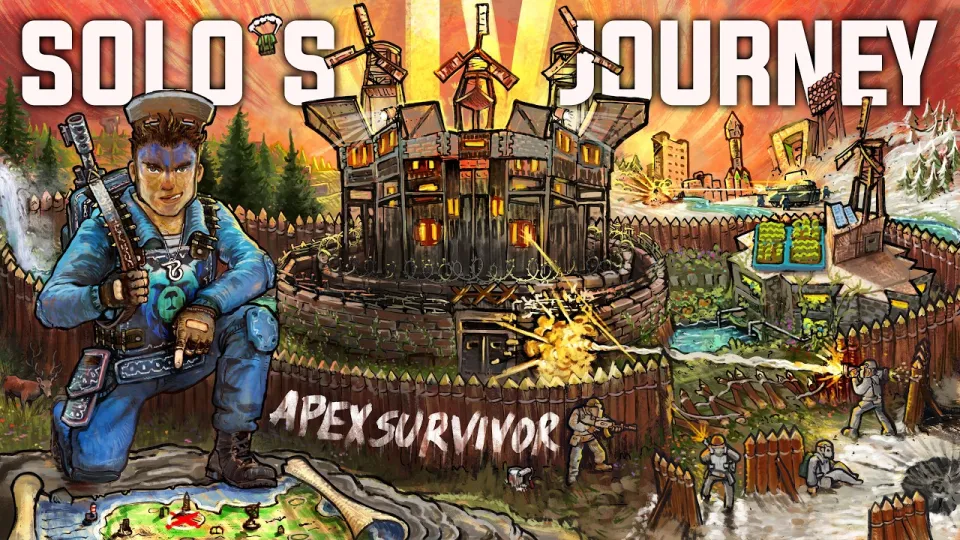
Video: Rust - A Solo's Journey IV: Apex Survivor (Movie)
You can order the same kind of articles for your own video to boost it on YouTube and Google. Just message the Telegram bot @sat_sit_bot. Articles with your video embedded are written and posted by the bot itself — on popular topical sites (no ads). Free trial — 50 articles.
Rust solo survival means running a wipe alone on a server full of clans, and Blooprint's A Solo's Journey IV: Apex Survivor is a 14-day solo run on a long wipe, edited into a single movie of roughly four hours and fifty minutes. The film follows one player from first spawn to endgame, and viewers can follow the challenge step by step through the timestamp tracker at the Solo's Journey progress site. It is the fourth entry in the Solo's Journey series and the channel's most ambitious solo project to date.
What Rust solo survival actually demands
Solo Rust is a resource-management problem before it is a combat problem. Without clanmates, every scrap, every blueprint and every hour of upkeep comes from one player, so the run in Apex Survivor leans on routine: secure a starting base, get a workbench and research table going, then convert farmed materials into gear before the next wipe cycle punishes any delay. The 14-day format stretches that loop far past a normal weekend wipe, which means base defense, storage redundancy and steady upkeep matter as much as aim.
Inside the Apex Survivor format
Apex Survivor is structured as a movie rather than a highlight reel. The published cut runs 12 numbered chapters plus an introduction and an ending, moving from early-game scrap runs to late-wipe raids and set-piece fights. Filming and editing took more than 300 hours according to the video description, which explains why the pacing favors long, unbroken stretches of gameplay over quick cuts. The result is closer to a documentary series finale than a montage: the audience watches decisions accumulate, not just kills.
How the Solo's Journey tracker works
A dedicated website was built specifically for this video. At https://solosjourneytracker.com viewers enter a timestamp from the movie and immediately see the challenge progress at that point, which matters for a video long enough to be watched in several sittings. The tracker doubles as a checklist of goals across the run. For anyone studying solo Rust rather than just watching it, that structure turns the movie into a reference: pick a timestamp, see what stage the account was at, and compare it with your own wipe.
Skills solo players can take from the run
Solo Rust rewards preparation over aggression, and the movie shows that pattern repeatedly. The practical takeaways are:
- Build a farm base early and keep the main base separate, so losing one does not end the run.
- Treat monuments and water content as scheduled income, not opportunistic detours; Oil Rig and Cargo Ship runs are the reliable path to components and military crates for a player without a team.
- Clone and breed what you need instead of buying it with time you do not have; genetics work pays back across a long wipe.
- Raid with information first. Scouting, door camping and timing matter more when nobody is watching your back.
- Accept losses. A 14-day solo run includes wipes and setbacks, and the movie's arc depends on recovering from them rather than avoiding them.
Why a five-hour Rust movie works
Long-form Rust content succeeds when the story earns the runtime. A Solo's Journey IV leans on continuity: the same base, the same neighbors, the same grudges across 14 days, so a raid in a late chapter lands harder than it would in a ten-minute clip. The chapter structure gives viewers natural stopping points, and the tracker gives them a reason to return. Audience reaction to the release focused on exactly that, with viewers treating the runtime as a feature and describing the pacing as closer to a series finale than a gameplay video. The milestone context helps too: the project was released around the channel's 2.5 million subscriber mark.
Common questions about the run answered
Viewers repeatedly ask whether a solo player can compete on a populated server. The movie's answer is yes, but conditionally: solo survival works through efficiency, base discipline and picking fights on your own terms rather than through raw numbers. A second recurring theme is base design. The run's core layout drew attention for being unconventional, and the lesson is that a farm base built for throughput can outperform a prettier, more expensive design. A third is community behavior. The film includes interactions with neighbors and groups that range from friendly to hostile, and the takeaway for solo players is that reputation on a server is a resource like any other. Finally, newcomers ask whether the movie is watchable without Rust experience; the chapter structure and the tracker make it accessible, though the vocabulary of scrap, upkeep and monuments arrives fast.
Useful links
- Solo's Journey progress tracker: https://solosjourneytracker.com
- Blooprint vinyl figure (limited run until Oct. 27): https://youtooz.com/products/blooprint
- Solo's Journey mousepads and playmats (until Jan. 3): https://epicdesk.shop/collections/blooprint
- Animated intro studio: https://x.com/highresolution0
- Thumbnail artist: https://twitter.com/veys_el_kara
Final takeaway
A Solo's Journey IV: Apex Survivor is the clearest recent demonstration of what solo Rust looks like when it is played patiently across a long wipe: farming on schedule, defending a base alone, and turning setbacks into later chapters. The 14-day scope and the 300-plus hours of production put it well beyond typical gameplay uploads, and the tracker makes the whole thing navigable. Blooprint's channel is the author of this project, and the movie stands as the reference point for anyone weighing a solo wipe in Rust. If you want to follow the challenge in detail, start at https://solosjourneytracker.com and work through the chapters with the progress map open.
Key takeaways
- Blooprint survived 14 real days solo in Rust and released the result as a 4-hour-50-minute movie, A Solo's Journey IV: Apex Survivor.
- The edit and filming took over 300 hours according to the video description, with the runtime split into 12 chapters plus an intro and ending.
- A dedicated site, solosjourneytracker.com, lets viewers type a timestamp and see the exact challenge progress at that moment.
- The run was published to mark 2.5 million subscribers on the Blooprint channel, with limited merch tied to the milestone.
- Core solo Rust skills on display: base placement, farming efficiency, Oil Rig and Cargo Ship runs, and raiding without a clan.
Questions & answers
How long is Blooprint's Apex Survivor Rust movie?
The published cut runs about four hours and fifty minutes, split into an introduction, 12 numbered chapters and an ending. The description notes that filming and editing took more than 300 hours. It is designed to be watched in parts, with the timestamp tracker helping viewers resume where they left off.
Can you actually survive 14 days solo in Rust?
Yes, but it depends on the server and on routine rather than raw skill. A solo player needs a working farm base, steady component income from monuments and water content such as Oil Rig and Cargo Ship, and enough storage redundancy to absorb losses. The 14-day format in this run shows that consistency beats aggression over a long wipe.
What is the Solo's Journey tracker website?
It is a site built specifically for this video at https://solosjourneytracker.com. You enter a timestamp from the movie and it shows the challenge progress at that moment, effectively acting as a checklist of goals across the run. It is useful for viewers watching in multiple sessions.
Is the movie worth watching if I have never played Rust?
The chapter structure and the progress tracker make it followable without prior experience, and the run is presented as a story rather than a mechanics tutorial. Expect Rust-specific terms like scrap, upkeep and monuments to arrive quickly, but the arc of building, defending and raiding carries the film.
Source: Rust - A Solo's Journey IV: Apex Survivor (Movie) · Markdown version